ALPHA
MAGAZINE
An Ode to California Skate Culture
written by
CLINT PORTE
California lived in my imagination long before it ever appeared on a departure board with my name next to it. Back then it arrived through music videos, late night television, through album covers passed between friends, through the grainy glow of skate tapes that made the Pacific feel like a permanent sunset.
My cousin and I grew up studying West Coast artists the way other kids memorized sports stats. The sound, the posture, the loose confidence of it all suggested a world where creativity spilled into the streets and nobody asked permission to belong.
I never learned to skateboard beyond a shaky few inches of forward motion, yet my closet told a different story. Vans and Converse stacked up by the door, their canvas worn in the places that mattered. Strangers would clock the shoes, the cuffed denim, the thrifted flannels, and ask if I skated.
I would tell them the truth. I just hung around skaters. That proximity was enough. Skate culture has always extended beyond the board, radiating into fashion, music, film, and the small codes of recognition exchanged between people who understand its language.
What began in Southern California decades ago now travels globally, recognizable in Tokyo alleyways, Parisian plazas, and underpasses from São Paulo to Seoul. Yet its DNA still traces back to a specific geography.
In the 1950s and early 60s, surfers in coastal communities like Santa Monica and Venice began attaching roller skate wheels to wooden planks, chasing the sensation of riding waves when the ocean went still. Sidewalk surfing, they called it. The boards were crude, the wheels unforgiving clay, but the impulse was pure California: improvise, adapt, keep moving.
By the 1970s, technological shifts changed everything. Urethane wheels replaced clay, offering grip and control that transformed possibility into performance. In the neglected coastal stretch between Venice and Santa Monica
known as “Dogtown”, a group of young surfers and skaters reimagined what a board could do. The Zephyr team, later mythologized as the Z Boys, carved aggressive lines through empty backyard pools during a drought, riding vertical walls with a surfer’s style and a street kid’s fearlessness.
Names like Tony Alva, Jay Adams, and Stacy Peralta became shorthand for a new attitude that fused rebellion with artistry. Dogtown was not just a place. It was a stance, a refusal to stay within the lines painted by someone else.
That ethos echoed far beyond California. By the time the Lords of Dogtown story reached wider audiences through film and documentaries, the mythology had already seeped into global youth culture. The image of sun bleached hair, scraped knees, and boards clattering against concrete carried a promise of autonomy. You did not need a field, a court, or a coach. You needed pavement and nerve.
Growing up in the early 2000s, my generation encountered skate culture through a different lens. Tony Hawk’s video games turned tricks into digital muscle memory.
The X Games broadcast vert ramps and BMX courses into suburban living rooms, reframing fringe sports as prime time spectacle. Even kids who never touched a board learned the vocabulary. Kickflip. Ollie. Heelflip. We spoke the language long before we understood its origins. The aesthetic followed close behind, threading its way into streetwear, album art, and the posture of anyone trying to look unbothered while caring deeply.
Skateboarding thrives on this paradox. It invites participation while remaining indifferent to approval. My friend and I have bonded with strangers in distant cities over casual skate talk, conversations sparked by a scuffed shoe or a deck tucked under an arm.
There is an immediate familiarity in those exchanges, a shared acknowledgment of scraped concrete and long afternoons spent chasing small victories. The culture rewards observation as much as performance. Watching becomes its own form of belonging.
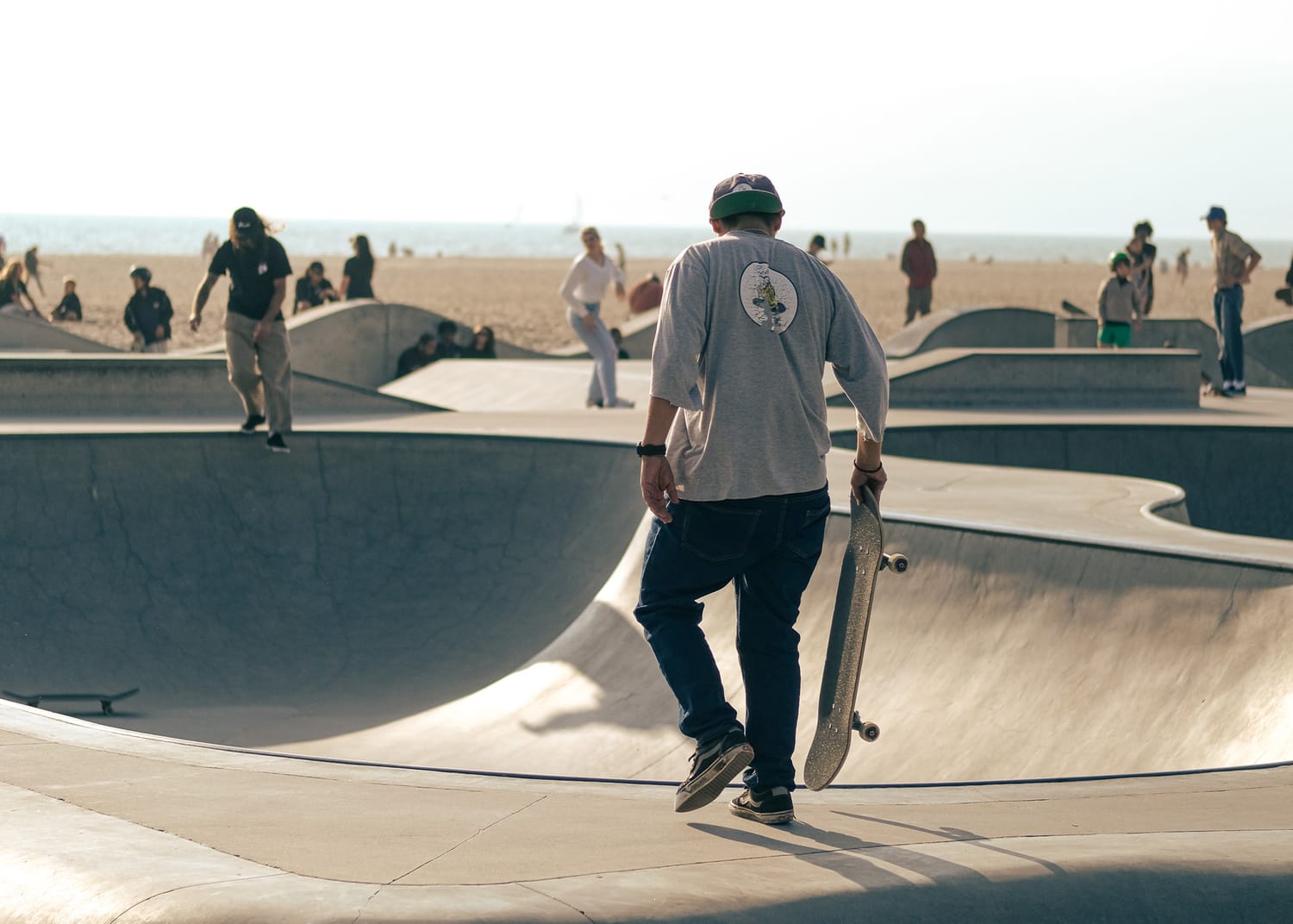
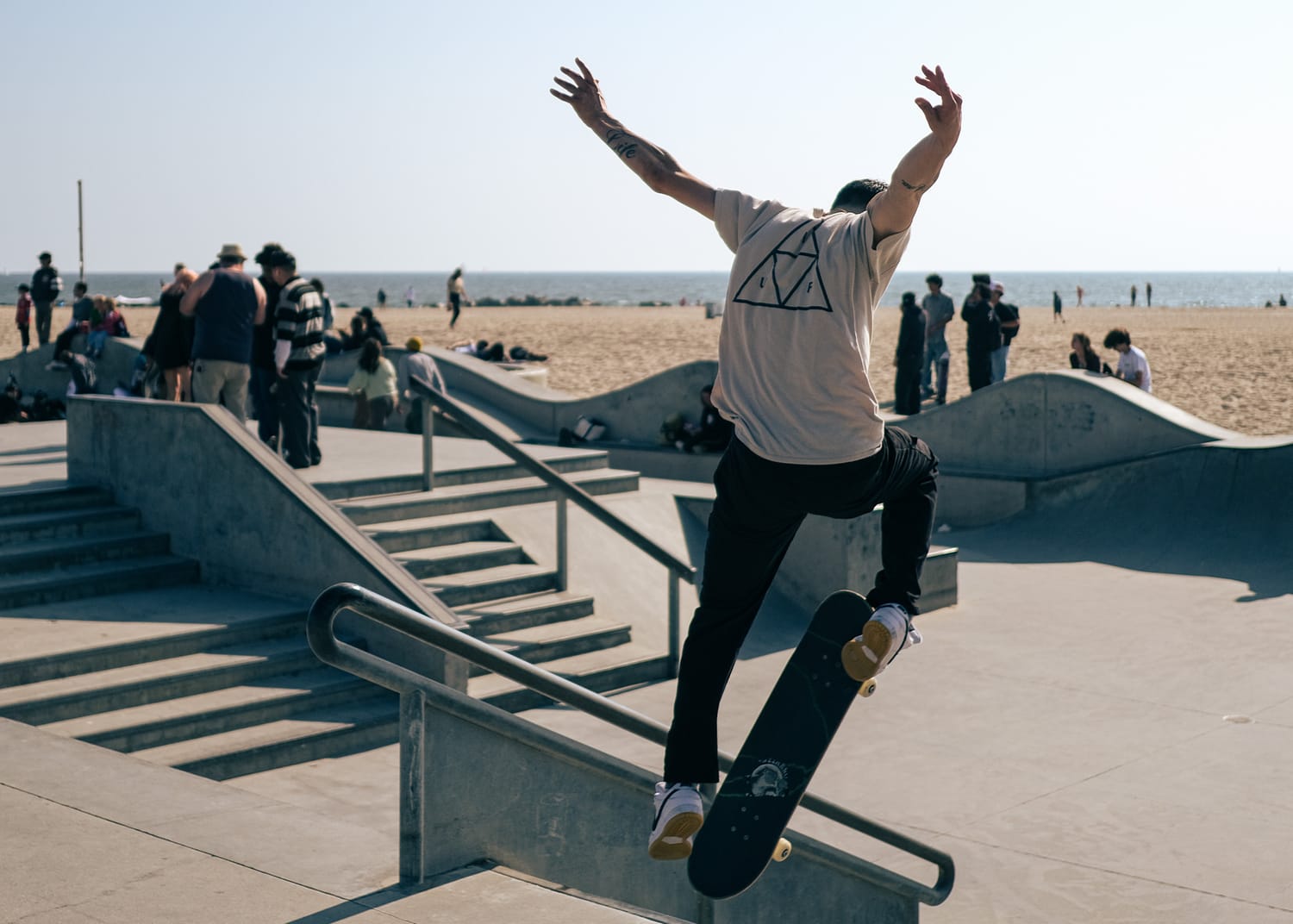
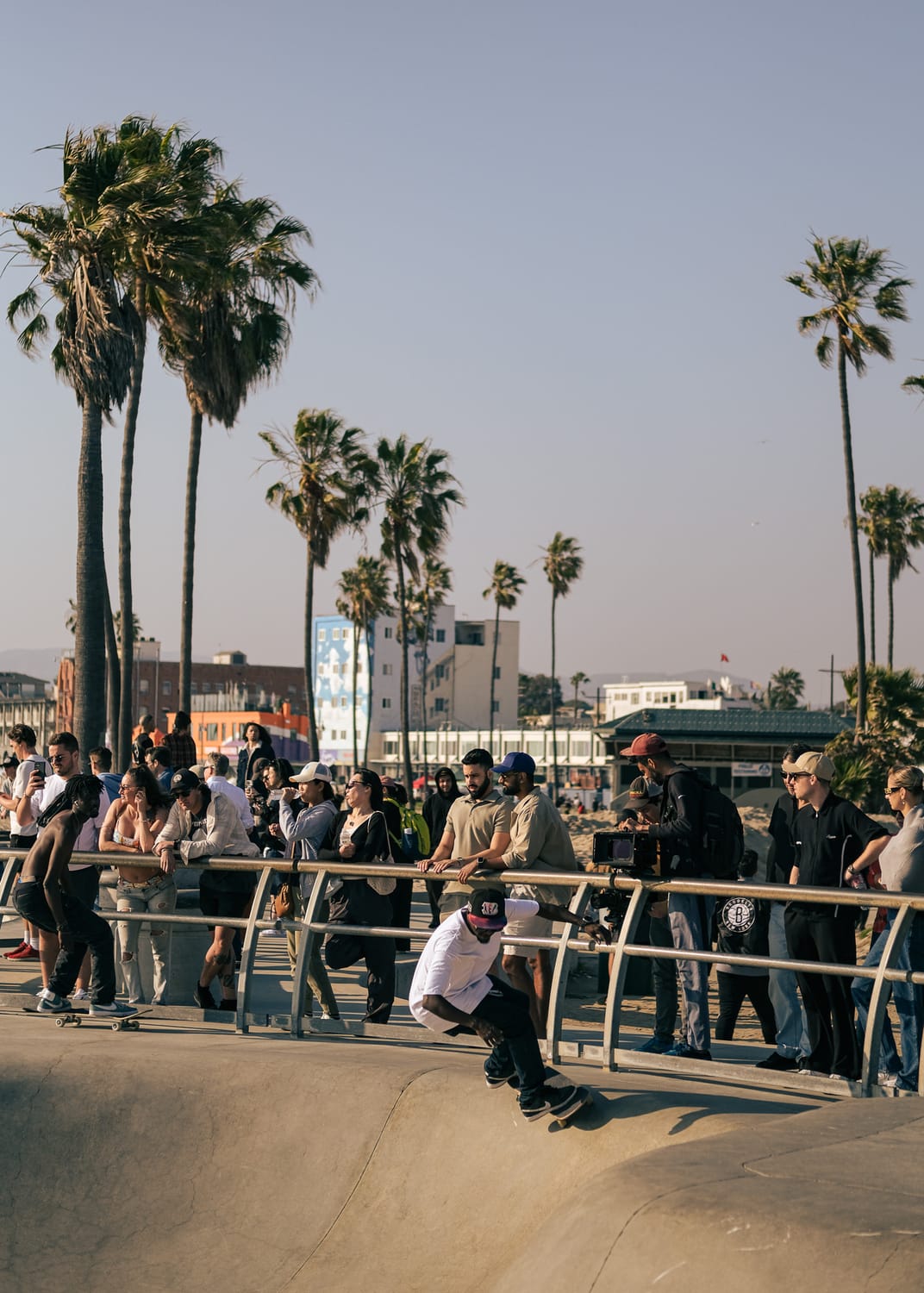
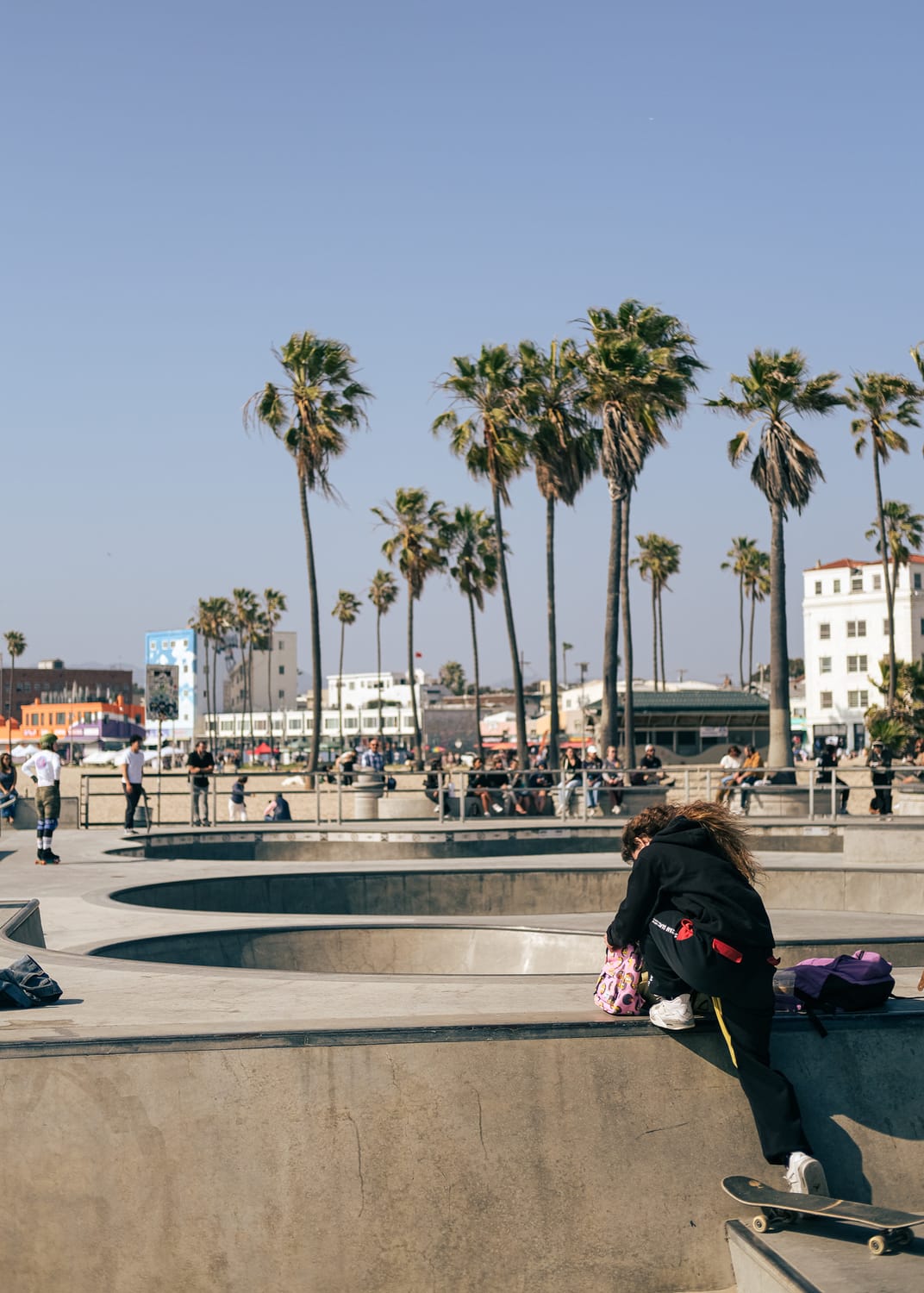
Los Angeles, when I finally arrived, felt both unfamiliar and already mapped in my mind. Venice Beach in particular carried the weight of legend. Walk the boardwalk long enough and the rhythms of the place reveal themselves. Vendors hawk handmade jewelry beside muralists working in real time. Street performers draw circles of applause. Then there is the skatepark, a concrete amphitheater carved into the sand, where the sound of wheels meeting coping cuts through the ocean air.
The Venice Beach Skatepark opened in 2009, but its spirit predates its construction by decades. Before the official bowls and transitions, skaters claimed whatever terrain they could find, weaving through pedestrians, grinding along ledges, transforming architecture into opportunity. The park formalized what had long been an improvisation, creating a space where generations intersect.
On any given afternoon, young kids hover at the edges, boards clutched to their chests, rehearsing courage. Older skaters drop in with the ease of muscle memory, their bodies carrying years of accumulated impact. The energy circulates between them. Youth offers momentum. Experience offers style.
There is a generosity to the scene that contradicts its outsider reputation. Applause follows a clean line. Collective groans accompany a hard fall. Advice travels freely, shouted across the bowl between strangers who may never exchange names. The park becomes a classroom without a roster, a stage without a program. Sunlight shifts, shadows lengthen, and still the rhythm continues, wheels tracing
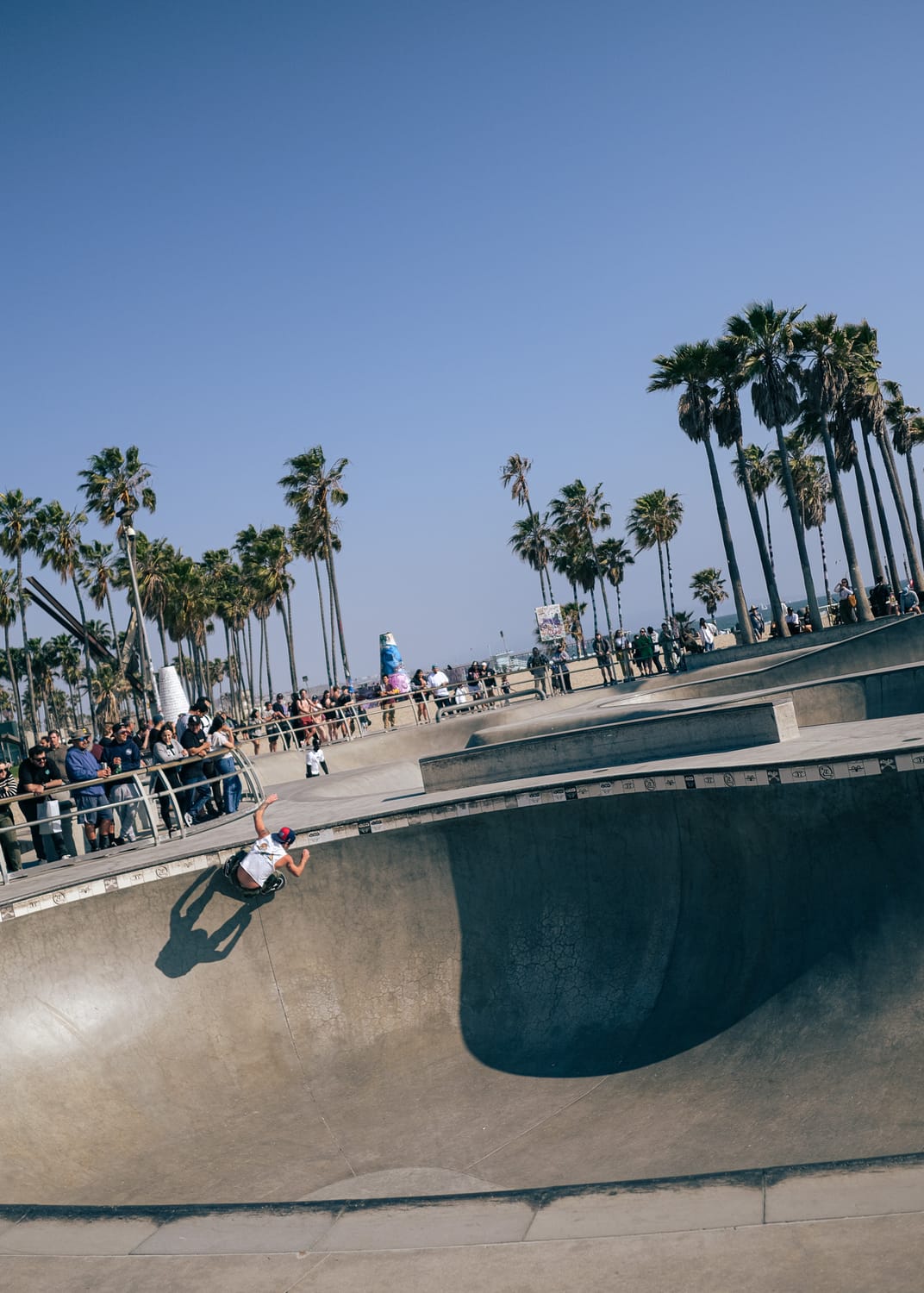
arcs that briefly defy gravity before surrendering to it again. Standing there, watching, I felt the through line from those early sidewalk surfers to the present moment. The boards are sleeker now, the tricks more technical, the global reach undeniable. Yet the core remains intact. Skateboarding persists as a conversation between body and environment, risk and control, solitude and community. It resists easy categorization, existing simultaneously as sport, art form, and social network.
California’s influence on my life had always been abstract, filtered through media and secondhand stories. In Venice, it became tactile. The salt air, the rough texture of concrete under palm, the sudden cheer when someone lands a trick they have chased all afternoon. Even without the ability to ride, I recognized the feeling. It was the same pull that drew my cousin and me to West Coast music years earlier, the same instinct that made a pair of worn Vans feel like a passport.
It all started here, people say, gesturing toward the coastline, toward Dogtown, toward the idea of a place where reinvention feels ordinary. Watching the skaters move through that space, I understood that the beginning is not a fixed point on a map. It is a mindset carried forward, one push at a time, wherever concrete meets possibility.
credits
photographer
Clint Porte - @paper.clint

THE NEWSLETTER
Subscribe to the Alpha Magazine newsletter to stay informed, hipped and aware of all things happening in the Alpha brand. This includes exclusive news & events, products and promotions. You may opt-out of our newsletter, hassle-free.
YOU MIGHT ALSO LIKE

MEN'S & WOMEN'S EMPOWERMENT
THE ALPHA GROUP
MEDIA & PUBLICITY
RESOURCES
LOS ANGELES, CA